DeFi (Decentralized Finance): A Beginner’s Guide to How It Works, Why It Matters, and How to Use It Safely.
DeFi—short for Decentralized Finance— has become one of the most talked-about areas in crypto. People say it can “replace banks,” “earn yield,” “swap tokens freely,” or “access financial services anywhere.” Those claims sound exciting, but DeFi is also complex, fast-moving, and sometimes risky. If you’re new, it helps to understand what DeFi actually is, how it works under the hood, and what practical steps you can take to stay safe.
This article will walk you through the basics of Defi in a clear, structured way: what it is, the main components (wallets, smart contracts, tokens), the most common use cases (swaps, lending, liquidity pools, yield), and key risks you should know before you connect your wallet.
1. What Is Defi?
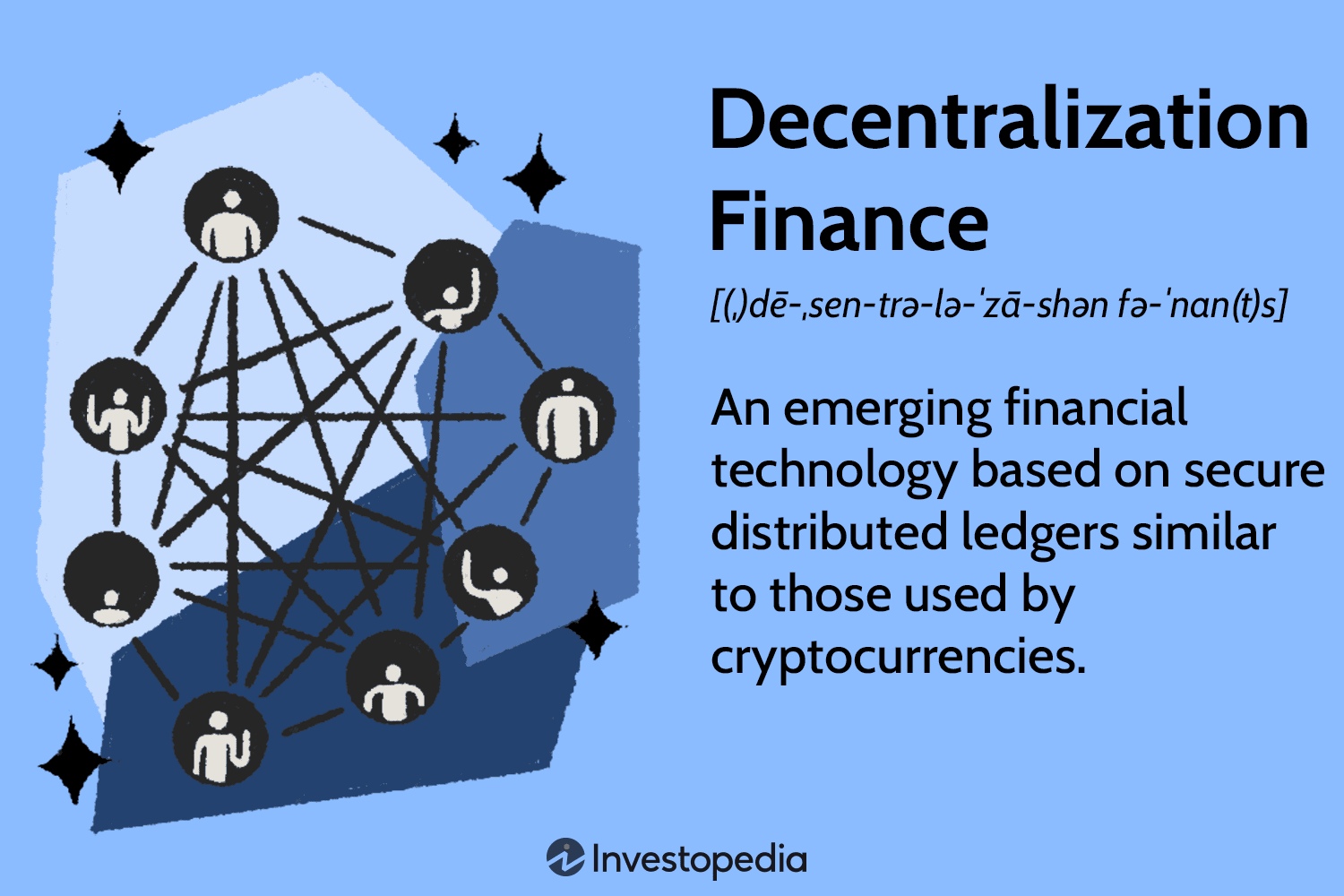
DeFi (Decentralized Finance) is a set of financial applications built on blockchain networks—most commonly Ethereum, Layer 2 networks, and other smart-contract capable chains.
Traditional finance typically depends on intermediaries:
- Banks manage deposits and withdrawals
- Exchanges help users trade assets
- Lenders and borrowers match through contracts and policies
- Custodians store assets and handle compliance
In DeFi, those roles are largely replaced by:
- Smart contracts (self-executing programs on-chain)
- Decentralized exchanges (DEXs)
- Automated lending protocols
- Liquidity pools and market-making algorithms
Instead of trusting a company or institution, users interact directly with code and the blockchain. That’s the “decentralized” part: the system is controlled by smart contracts and distributed networks rather than a single corporation.
2. The Building Blocks of DeFi
To understand DeFi, you need to know the main components that appear everywhere.
A) Wallets (Your “bank account” interface)
A DeFi wallet lets you:
- hold crypto assets
- sign transactions
- connect to decentralized apps (dApps)
- manage tokens and permissions
Common wallet tasks include approving a contract to spend your tokens, swapping assets, and depositing funds into protocols.
B) Smart Contracts (The “engine”)
Smart contracts are pieces of code deployed on the blockchain. They:
- define rules for trading, lending, borrowing, and withdrawals
- manage liquidity and accounting
- enforce collateral constraints
- distribute rewards or interest based on pre-set logic
Once deployed, contracts run exactly as written (though upgrades, permissioning, or bugs can change real-world behavior—more on risks later).
C) Tokens (Assets and incentives)
DeFi uses many kinds of tokens:
- Stablecoins (aim to track prices like USD)
- Utility tokens (used to pay fees, earn rewards, or govern protocols)
- Wrapped assets (e.g., tokens representing another asset)
- Liquidity provider tokens (LP tokens) (represent your share in a pool)
- Borrowed/interest-bearing representations (protocol-specific tokens that represent claims)
If you’re new, one of the biggest learning curves is understanding what each token actually represents.
D) On-chain Oracles (Optional but common)
Some DeFi systems need real-world price data (e.g., ETH/USD). Oracles provide that data. Oracle choice matters because inaccurate or manipulated pricing can break markets or create vulnerabilities.
3. How DeFi Transactions Work
Most DeFi actions follow a pattern:
- Connect wallet to a dApp
- Review what you’re signing
- Approve tokens (if needed)
- Confirm transaction
- Wait for blockchain finality
- Check results in your wallet and the protocol interface
Because everything is public and verifiable on-chain, DeFi is transparent in a way many traditional systems are not. But transparency doesn’t automatically mean simplicity—especially when you see contract interactions, token approvals, or multiple steps for one “user action.”
4. The Main Types of DeFi: What People Use It For
DeFi isn’t one single product—it’s a broad ecosystem. The most common categories are:
1) Decentralized Exchanges (DEXs) and Token Swaps
A DEX allows users to swap tokens without a centralized order book. Instead of buyers and sellers matching manually, many DEXs use liquidity pools and algorithms.
Liquidity pools (simple concept)
A liquidity pool is a shared pool of token pairs (for example, Token A and Token B). Users provide liquidity and earn fees. Traders swap against the pool.
Two common swap styles:
- Automated Market Makers (AMMs): price is determined by the pool’s reserves and a curve (like constant product).
- Order-book DEXs: less common in some ecosystems; uses orders rather than reserve curves.
Why swaps matter
Swaps are often the first DeFi action people try because they’re relatively straightforward: choose a token, enter amount, trade, confirm.
2) Lending and Borrowing
DeFi lending platforms allow users to:
- deposit collateral (often tokens)
- earn interest
- borrow other assets against collateral
- manage health factors / collateral ratios
Often, borrowing is over-collateralized for risk control. That means you typically must deposit more value than the amount you borrow.
Interest rates in DeFi
Interest rates can vary based on:
- supply and demand
- utilization of the lending pool
- protocol incentives
So the yield you see today might change tomorrow.
3) Liquidity Provision and Yield Farming
If you add liquidity to a pool, you may earn:
- trading fees
- additional rewards (in governance tokens or incentives)
This is where yield farming comes in: users move assets between pools and protocols to maximize returns.
But higher yield often comes with higher risk—such as impermanent loss, smart contract risk, or token price risk.
4) Staking and Governance
Some DeFi tokens can be staked to:
- earn rewards
- participate in governance (vote on upgrades or parameters)
Governance models vary widely. Some are community-led; others are controlled or influenced by a foundation or core team.
5) Derivatives and Perpetuals (advanced category)
Some DeFi systems offer:
- leverage trading
- perpetual futures
- option-like structures
These can be powerful but are generally riskier, especially for beginners due to leverage liquidation and complex funding mechanisms.
5. Understanding Yield: Why DeFi Can Pay Returns
A lot of people are attracted to DeFi because it can generate yield. Common sources of yield include:
- Trading fees from swaps in DEX liquidity pools
- Borrow interest paid by borrowers in lending protocols
- Protocol incentives (extra tokens distributed for participation)
- Staking rewards and governance token emissions
- Vault strategies that rebalance and compound returns
Important: yield is not free money. It’s usually paid by someone taking a risk—like impermanent loss in pools, credit/liquidation risk in lending, or market risk in strategy vaults.
6. DeFi Benefits (Why People Like It)
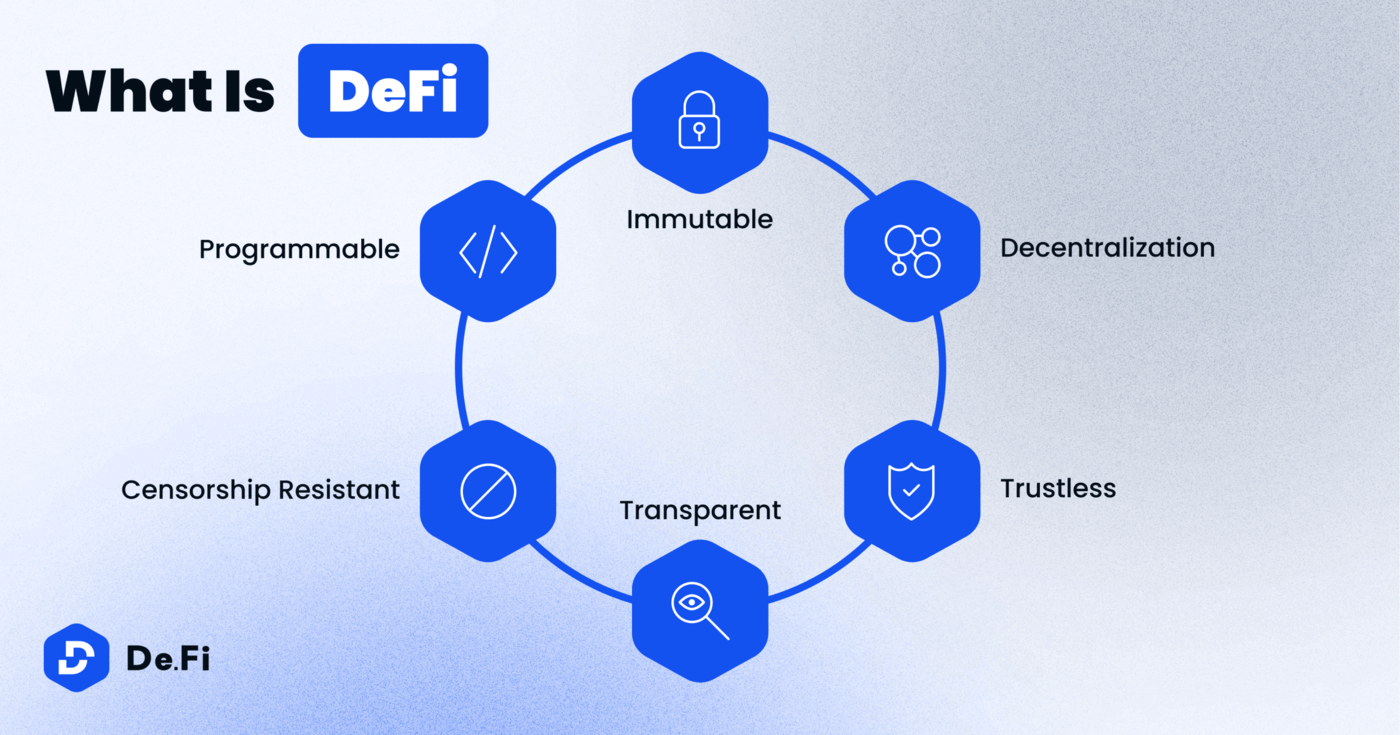
DeFi has real advantages:
A) Accessibility
In many cases, DeFi can be used globally as long as you have internet access and a compatible wallet.
B) Composability
DeFi is “composable,” meaning protocols can interact like building blocks:
- one app can use a token from another app
- a lending protocol might use collateral that came from a DEX
- a vault might automate swaps and re-investments
This can create powerful strategies—but also creates complex dependency chains (more risk considerations below).
C) Transparency
Smart contract code and on-chain activity can be inspected publicly. Users can verify actions rather than relying only on marketing claims.
D) Programmability
Developers can create new financial products:
- automated strategies
- tokenized positions
- custom collateral types
This leads to innovation, though safety must keep pace.
7. DeFi Risks You Must Understand
If you only remember one section, make it this one. DeFi risk is not hypothetical. It can lead to real loss of funds.
1) Smart contract risk
Even reputable projects can have vulnerabilities. Bugs, misconfigurations, or unexpected behavior can lead to exploitation.
2) Price and token risk
If you supply liquidity or earn rewards in volatile tokens:
- your position may lose value due to price changes
- reward tokens may drop relative to the assets you started with
Yield doesn’t protect you from principal loss.
3) Impermanent loss (for liquidity providers)
If you provide liquidity to a token pair and the prices move, you may end up worse off compared to simply holding the tokens outside the pool. Fees can offset it sometimes, but not always.
4) Liquidation risk (for borrowing)
If your collateral drops in value or you fall below a required collateral ratio, your position could be liquidated. Liquidations are often unforgiving in fast-moving markets.
5) Oracle risk
If price feeds are wrong, the system can misprice assets and fail. In extreme cases, attacks can manipulate oracle data.
6) Network and transaction risk
- If blockchain congestion increases, transactions can cost more (gas fees).
- Smart contract interactions can fail due to insufficient approvals, slippage limits, or parameter errors.
- Some protocols require multiple transactions for one action, increasing failure points.
7) Permission and approval risks
Many DeFi operations require token approvals. If you grant a large allowance to the wrong contract, a malicious or compromised contract could transfer your tokens.
8. How to Use DeFi Safely (Practical Checklist)
You don’t need to be an expert to use DeFi responsibly. You just need good habits.
Step 1: Start with small amounts
Test with a small balance. Treat your first few transactions as learning experiences.
Step 2: Use reputable protocols
Look for:
- strong community reputation
- audited contracts (and understand that audits don’t guarantee safety)
- transparent documentation
- clear risk disclosures
Step 3: Verify what you’re approving
Before you sign:
- check the contract address you’re interacting with
- confirm the token approval amount
- understand whether approvals can be reduced or revoked later
Step 4: Watch slippage and transaction settings
If you swap tokens:
- use reasonable slippage
- avoid extreme settings that could result in unfavorable execution
Step 5: Understand the position you’re creating
Ask:
- Is this lending? Borrowing? Liquidity pool? Vault strategy?
- What can cause loss? (price movement, liquidation, smart contract failure)
- How do you exit?
Step 6: Diversify and avoid chasing maximum yield
Very high APY can be a sign of:
- risky tokens
- unstable rewards
- new markets with limited liquidity
- promotional emissions that may end
Look for sustainable drivers of yield (fees, utilization, robust demand), not just the number.
Step 7: Keep security basics tight
- protect your seed phrase
- avoid phishing links
- use official website URLs
- consider hardware wallets for larger holdings
9. The Future of DeFi
DeFi is evolving quickly. Trends that are shaping what comes next include:
- Layer 2 scaling to reduce fees and increase throughput
- more sophisticated vault strategies with better risk controls
- real-world asset tokenization (RWA) experiments
- improved compliance tooling and risk frameworks
- stronger emphasis on audits, monitoring, and insurance mechanisms
However, growth also attracts attackers. The future of DeFi will likely include both better technology and more sophisticated adversaries. That’s why user education and cautious participation will remain important.
Conclusion: DeFi Is Powerful—But Treat It Like Real Finance
DeFi is not magic. It’s automated finance powered by smart contracts and public ledgers. It can offer accessibility, transparency, and innovative financial tools that are hard to replicate in traditional systems.
But it also carries risks: smart contract bugs, price volatility, liquidation mechanics, oracle issues, and approval dangers are all real. If you want to participate, do it with a learning-first mindset, start small, understand what you’re signing, and prioritize safety over hype.
If you’d like, tell me your target audience (complete beginners, intermediate crypto users, or DeFi traders) and I can rewrite this article with examples tailored to your level—and add a section like “Step-by-step: how to make your first DeFi swap/lend safely.”
Things people ask about Defi
1) What does DeFi mean?
DeFi stands for Decentralized Finance. It refers to financial services (like swapping tokens, lending, borrowing, earning yield) that run on blockchain networks using smart contracts, rather than traditional banks or centralized exchanges.
2) Do I need a lot of money to use DeFi?
No. You can start with a small amount. The main goal at the beginning is to learn how transactions work, how approvals work, and how to recognize fees, slippage, and the steps needed to enter and exit positions.
3) Is DeFi safer than keeping money on centralized exchanges?
Not automatically. DeFi can be safer in some ways (self-custody, transparent code), but it can also be riskier (smart contract bugs, liquidation, price volatility, complex interactions). The safest approach is to start small and understand the risks.
4) What is a wallet, and why do I need it for DeFi?
A crypto wallet is how you hold assets and authorize actions on the blockchain. In DeFi, your wallet:
- connects to apps (dApps),
- signs transactions,
- and controls approvals (permissions for contracts to spend your tokens).
Without a wallet, you can’t interact with most DeFi applications.
5) What does “connect wallet” mean?
It means your wallet lets a DeFi app know which account you’re using. Usually, the app can then ask you to sign transactions (like swapping tokens or depositing into a pool). Connecting is different from signing—connection is often just recognition; signing changes on-chain state.
6) What is a DEX?
A DEX (decentralized exchange) is a place to trade tokens without relying on a central company as the trader or custodian. Many DEXs use liquidity pools to enable swaps.
7) What is a liquidity pool?
8) What is impermanent loss?
9) What is “yield” in DeFi?
Yield is the return you earn from participating in DeFi, such as:
- swap fees in liquidity pools,
- interest paid by borrowers,
- staking rewards,
- incentives from a protocol.
But yield can change, and it often comes with risk or token price movement.
10) Is DeFi yield guaranteed?
No. Many things can reduce or eliminate yield, like:
- declining demand,
- lower trading volumes,
- reward token price falling,
- protocol changes,
- or changing interest rates.
Also, yield doesn’t necessarily protect your principal from losses.